A website is often one of the first places where a potential customer evaluates a business. Within a few minutes, visitors form an impression of the brand, look for the information they need, and decide whether to keep exploring.
Building a website that works well requires more than visual design. Strategy, user experience, content structure, and technical execution all influence whether the final site is clear, useful, and aligned with the goals of the business.
The website design and development process works best when these decisions are made together rather than passed from one isolated stage to another. Early choices about structure, content, interaction, and technology can affect everything that follows.
At Aalix Studio, our Digital Design services connect these areas from the beginning, helping turn an initial idea into a functional and coherent digital experience.
What Is the Website Design and Development Process?
The website design and development process is the series of decisions and actions that turns an initial idea into a working digital product.
Design and development are closely connected. Design shapes how users navigate, understand, and experience the website, while development turns those decisions into a reliable experience across devices and browsers.
The process should begin with purpose, not visual styling. Before choosing colors, layouts, or technologies, the team needs to understand the brand, its audience, and what the website is expected to achieve.
Useful questions at this stage include:
- What does the brand need the website to communicate?
- Who are the main users, and what information are they looking for?
- What actions should visitors be able to take?
Once those answers are clear, later decisions about structure, design, content, and technology become much easier to evaluate.
The Main Stages of Website Design and Development
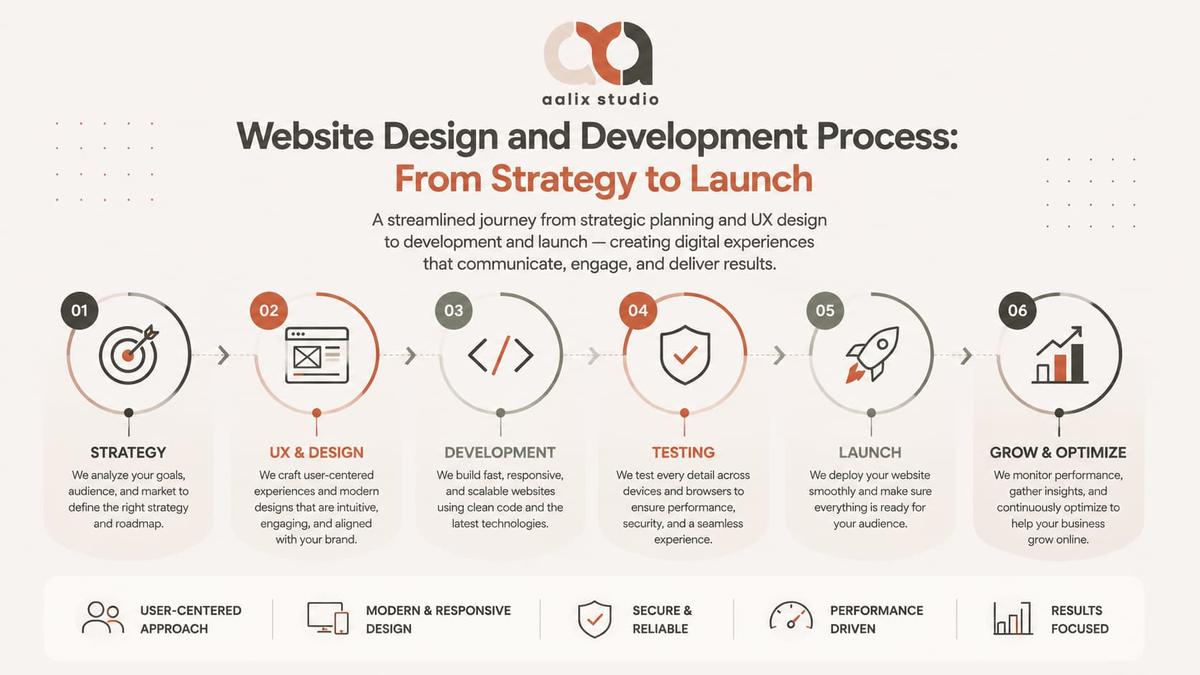
Every website has different requirements, but most professional projects follow a structured sequence. These website design stages help turn an initial idea into a site that is clear, usable, and technically sound.
Stage 1: Discovery and Website Strategy
Before layouts or visual styles are explored, the team needs to understand what the website is meant to do.
Discovery focuses on the brand, audience, competitors, business goals, and the problems the website needs to solve. For one company, the priority may be generating qualified leads. For another, it may be presenting work, building credibility, or creating a stronger digital presence.
This is where the web design process gains direction. Strategy helps the team decide what deserves attention, what users need to find quickly, and which actions should be encouraged.
Reza Soufian, Aalix Studio’s website designer, approaches strategy, design, and development as connected parts of the same project rather than separate handoffs.
The strongest results come when those decisions support the same direction from the beginning.
Stage 2: Information Architecture and User Experience Planning
After the strategy is clear, the next step is deciding how information should be organized and how users will move through the site.
Information architecture defines the relationship between pages, navigation, content groups, and key actions. A visually impressive website can still fail if visitors struggle to understand where to go or how to find what they need.
For a service-based business, the journey may move from understanding the company to exploring services, reviewing previous work, and eventually requesting a consultation. Each step should feel intentional and easy to follow.
Good UX planning also makes future growth easier. When the structure is planned well, new services, content, and features can be added without making the site feel confusing or fragmented.
Stage 3: Visual Design and Interface Creation
Once the structure and user journey are defined, visual design can begin.
This stage translates the brand into a digital interface through typography, layout, imagery, color, and interaction. The goal is not simply to make the website look distinctive, but to make the visual system support clarity and usability.
A distinctive interface should not make visitors work harder to understand the content.
At Aalix Studio, website projects often connect directly with brand identity and visual systems, so the website feels like an extension of the brand rather than a separate visual layer.
By the end of this stage, the visual language, messaging, and user experience should feel consistent across the site.
Stage 4: Website Development and Implementation
Development is where the approved design becomes a working website.
This stage can include custom coding, CMS setup, responsive implementation, integrations, accessibility considerations, and performance optimization, depending on the project.
The website development process should not begin as an isolated handoff after design is finished. Developers need enough context to understand the intended interactions, layout behavior, and technical priorities behind the interface.
Good collaboration between design and development helps preserve the original visual direction while making sure the site works reliably across devices and browsers.
The technology should support the experience rather than dictate it.
A Real Example: Greater Texas Orthopedic Associates (GTOA) Website
The Greater Texas Orthopedic Associates (GTOA) website is a useful example of how strategy can shape both structure and interface decisions.
The project had to serve different audiences while making medical information easy to find and understand. That meant organizing services clearly, simplifying navigation, and creating user journeys that helped visitors reach relevant information without unnecessary friction.
The final experience depended on content structure, navigation, and visual design working together rather than being treated as separate decisions.
Stage 5: Testing, Launch, and Continuous Improvement
Before launch, the website should be tested across devices, browsers, screen sizes, and key user flows.
This stage checks more than visual consistency. Forms, navigation, interactive elements, responsive behavior, loading performance, and technical issues all need to be reviewed before the site goes live.
Launch is not the end of the process. Analytics, search performance, content updates, user feedback, and future business needs can all reveal opportunities for improvement.
A well-built website should be able to evolve after launch without requiring the entire experience to be rebuilt.
Common Mistakes in Website Design and Development
Many website problems begin with decisions made too early or without enough context.
Common mistakes include:
- Designing before the business goals and user needs are clear.
- Prioritizing visual impact over navigation, readability, and usability.
- Treating development as a final handoff instead of involving technical thinking throughout the project.
- Choosing tools or technologies before understanding what the website actually needs to do.
These mistakes can lead to extra revisions, technical compromises, and a final site that looks polished but does not work as well as it should.
Aalix Studio’s Website Development Workflow
Aalix Studio’s website development workflow keeps strategy, structure, visual design, and technical implementation connected throughout the project.
The process starts by defining the purpose of the site and the needs of its users. From there, the team plans the information architecture, develops the visual system, builds the interface, tests the experience, and refines the site before and after launch.
Keeping those stages connected helps reduce unnecessary handoffs and makes it easier to preserve the original direction throughout the project.
Building Websites With Purpose
The best websites are not defined by visual style alone. They work because the brand, content, user journey, and technology support the same purpose.
A successful website should help people understand the business, find what they need, and take the next step without unnecessary friction.
The website design and development process creates the structure for that to happen, turning an initial idea into a site that can support both current goals and future growth.
At Aalix Studio, that means keeping strategy, design, and technical decisions aligned from the first conversation through launch.
Website Design and Development Process FAQ
What is the website design and development process?
It is the structured process of turning an initial idea into a working website through strategy, information architecture, UX planning, visual design, development, testing, launch, and ongoing improvement.
Why is strategy important before website design?
Strategy helps define the business goals, target audience, content priorities, and user journey before visual decisions are made.
What are the main website design stages?
The main website design stages include discovery and strategy, information architecture, UX and visual design, development, testing, launch, and continuous improvement.
What is the difference between website design and website development?
Website design focuses on structure, user experience, visual direction, and interaction, while development turns those decisions into a functional website that works across devices and browsers.