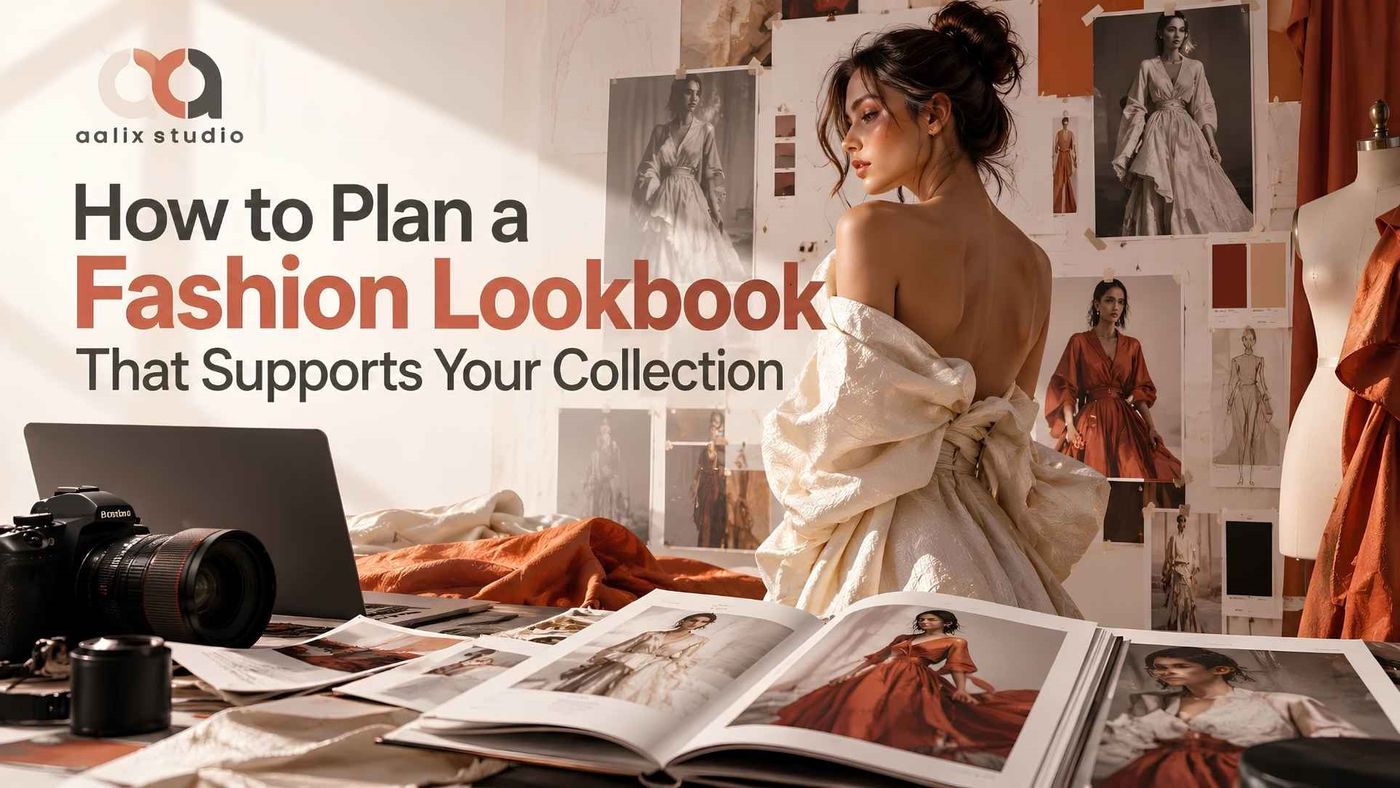
A fashion lookbook is the finished presentation of a collection through garments, photography, styling, layout, and sequencing. But the quality of those images is usually decided long before the shoot begins.
A lookbook is not the same as a moodboard. A moodboard helps develop the collection's visual direction; a lookbook presents that direction after it has been translated into garments. If the research, materials, proportions, and styling decisions are weak, stronger photography will not fix the underlying problem.
That is why learning how to plan a fashion lookbook starts with the collection itself: its concept, references, audience, and visual language. Every source should eventually influence something tangible, whether that is silhouette, material, construction, proportion, styling, or atmosphere.
Start With the Collection, Not the Shoot
Before collecting images or discussing locations, define what the collection is actually about. A title or theme is not enough. The designer needs to know which parts of the idea are strong enough to shape the garments and which are only visually attractive.
Before building the reference set, clarify:
- the central idea, period, place, emotion, object, or cultural reference;
- which parts of that subject could influence silhouette, color, material, construction, or detail;
- who the collection is for and how that audience dresses now;
- what the viewer should understand or feel when the collection is presented;
- which parts of the concept are essential and which can be removed without weakening the direction.
For a closer look at how those decisions continue through sketching, technical development, sampling, and fitting, see Aalix Studio's fashion design process.
Turn Research Into Design Decisions
Research is useful only when it changes the collection. Instead of gathering complete looks and treating them as answers, break references into parts and identify what each one contributes.
Use Historical and Cultural References as Material
Historical and cultural research can give a collection depth, but it should not lead to literal reproduction. A source might be a recent decade, a specific historical period, or a particular cultural context. The useful question is not “What should I copy?” but “What makes this source recognizable, and how can that quality be reinterpreted?”
A useful research set may include:
- silhouette, garment length, shoulders, collars, sleeves, closures, seams, and pockets;
- textiles, prints, embroidery, trims, surface treatments, and construction details;
- color relationships, accessories, styling, hair, makeup, and body presentation;
- architecture, interiors, art, photography, objects, and graphic culture;
- lifestyle, technology, social values, and the way clothing was used.
Context helps explain why those clothes looked and behaved as they did. A strong shoulder may communicate status or authority; a textile may reveal what materials or manufacturing methods were available. That context gives the designer something to reinterpret rather than imitate.
Compare Historical References With Fashion Now
Historical research becomes more useful when it is tested against contemporary fashion. Current proportions, materials, styling habits, and customer expectations help reveal which ideas can still work and which need to change.
This matters especially when the final presentation will function as a clothing brand lookbook for customers, buyers, or press. The goal is not to follow every trend. It is to understand the present well enough to decide what still feels relevant, what should be rejected, and what can be pushed further.
Compare past and present side by side: an archival collar against a contemporary neckline, an older coat proportion against current tailoring, or a historical textile pattern against modern fabrication. Those comparisons turn research into design choices.
Study Color, Form, Material, and Detail Separately
It is often easier to see the direction of a collection when color, form, material, and detail are researched separately before they are combined.
Color should relate to the concept, season, audience, and intended emotional response. Material needs the same level of reasoning. A silhouette changes when it moves from rigid wool to fluid satin, while texture can reference a period without copying an old garment.
A useful test when learning how to create a fashion lookbook is simple: can you explain why each reference is there? “I like this image” is not enough. Name the proportion, surface quality, textile behavior, construction detail, or color relationship that makes it useful.
Edit More Aggressively Than You Collect
Most designers can collect hundreds of images. The harder skill is deciding which ones actually belong.
Ask one question: if this image disappears, does the design thinking become less clear? If the answer is no, it probably does not need to stay.
A professional reference board should contain material that directly informs the collection. If the board explains color but says little about silhouette, material, or construction, the research is unbalanced. Editing is what turns a collection of attractive references into a usable design direction.
Example: Turning Historical Outerwear Into a Modern Autumn Collection
Imagine an autumn coat collection influenced by a period of twentieth-century dress but designed for a contemporary customer. The designer might begin with collars, shoulder structures, sleeve shapes, coat lengths, closures, checks, textiles, and colors from the chosen period.
Extract the Historical Characteristics
Identify the features that make the garments recognizable. The answer might be collar geometry, the shoulder-to-sleeve relationship, a fastening method, coat length, or a recurring textile pattern. Those characteristics become the source material for development.
Translate Them for the Present
Now compare those findings with contemporary outerwear. Which lengths feel relevant? Are shoulders dropped, rounded, soft, or strongly constructed? Which details can move into a modern collection naturally, and which would make the result feel too literal or costume-like?
A modern coat might keep an oversized contemporary silhouette while borrowing a historical collar shape. Another might reinterpret an archival textile pattern or soften a strong shoulder through lighter construction.
This research-to-development logic also appears in Aalix Studio's fashion design and digital fashion workflow, where concept, technical development, materials, and presentation are treated as connected stages.
The resulting clothing brand lookbook can then show a clear dialogue between historical references and contemporary design without making the collection feel like a reproduction.
Build a Visual Language, Not a Collection of References
Once the research has been edited, look for relationships between the sources that remain. Planning a fashion lookbook is partly an exercise in synthesis: which references can work together without weakening the central idea?
A curve might appear in architecture and sleeve construction. A repeated proportion might connect historical tailoring with a contemporary silhouette. The same restrained palette might move from archival photography into fabric selection and final styling.
A visual language forms when silhouette, color, material, detail, and presentation all support the same idea. The lookbook should make that relationship visible rather than introduce a new direction at the end of the project.
Let the Collection Define the Lookbook Shoot
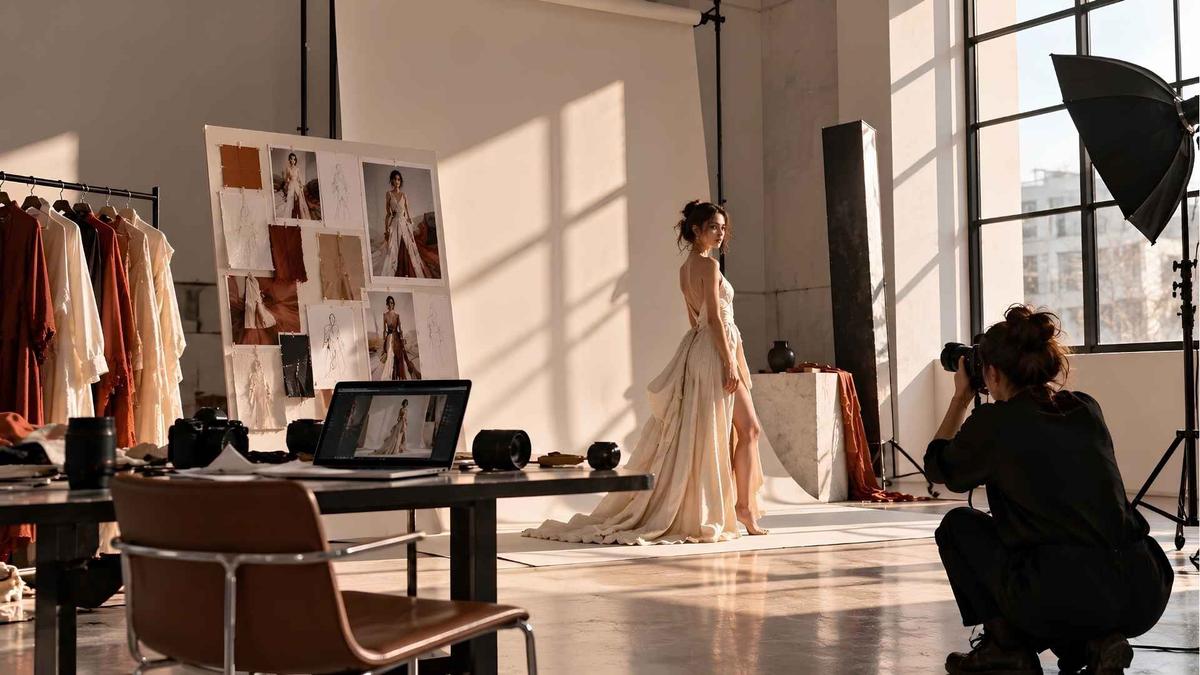
The research should still be visible once the garments are finished. A lookbook shot list should be built around what the collection needs to communicate, not around a generic set of poses.
If shoulder construction is central, the photography has to show it. If texture or surface work matters, close-ups are necessary. If movement changes the silhouette, still front views alone will not explain the garment.
A practical lookbook shot list may include:
- full looks, back views, three-quarter angles, and movement where silhouette needs explanation;
- close-ups for fabric, seams, closures, embroidery, trims, or concept-driven details;
- horizontal, vertical, and detail compositions for website, social, wholesale, press, or print;
- lighting, casting, styling, location, hair, and makeup that support the same visual direction;
- a sequence that moves through the collection without repeating the same framing.
A clear shot list also makes lookbook production planning more reliable because the team knows which frames are essential before the shoot starts.

If digital development is part of the collection, Aalix Studio's guide to 3D garment visualization explains how designers can review proportion, silhouette, and approximate fabric behavior before physical sampling.
Usage should also shape the plan. A clothing brand lookbook intended for wholesale may need clear garment views and consistent framing, while campaign and social content may need more movement and variation. Decide those outputs before the shoot so the final image set serves the channels it was created for.
Keep the Research-to-Design Path Visible
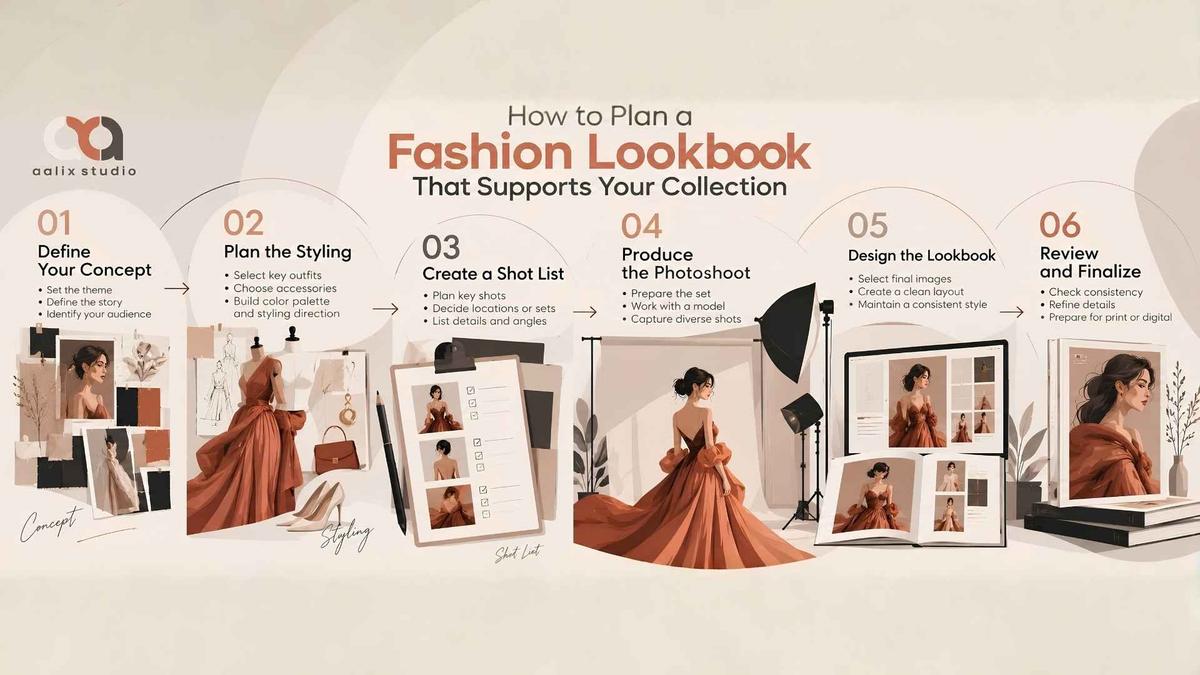
A useful way to understand how to create a fashion lookbook is to see it as the result of a sequence of design decisions rather than something assembled in one sitting.
The process moves from concept analysis into historical and cultural research, then into contemporary fashion review. Color, form, materials, and details are tested separately before the references are edited into a coherent visual language. Only then does the final presentation become clear.
The key stages are:
- concept analysis and research direction;
- historical and cultural research;
- market and contemporary fashion review;
- analysis of color, form, material, and detail;
- editing references and removing weak connections;
- defining the collection's visual language;
- translating research into garments;
- planning the lookbook shot list and final presentation.
When that path is clear, the final images feel like a continuation of the collection rather than content added after the design work is finished.

Final Thoughts: Every Reference Needs a Reason
Learning how to plan a fashion lookbook is ultimately about making stronger design decisions before the camera is involved.
A convincing lookbook appears coherent because the references, garments, styling, and final images all point in the same direction. Research changes the design; editing keeps the concept focused; photography makes those decisions visible.
The goal is not to preserve every good reference. Keep the ones that actually change the collection, then reinterpret them instead of copying them literally. When that happens, the lookbook does more than present finished clothes. It shows the thinking that held the collection together from the beginning.
Fashion Lookbook FAQ
What is the difference between a moodboard and a fashion lookbook?
A moodboard develops the visual direction of a collection through references, while a lookbook presents the finished collection through garments, styling, photography, layout, and sequencing.
When should fashion lookbook planning begin?
Planning should begin during collection development, before the shoot. Concept, audience, research, garment priorities, and final image uses all affect what the lookbook needs to show.
What should a lookbook shot list include?
It should include the views needed to explain the garments: full looks, back and three-quarter views, movement where relevant, close-ups for materials or construction, and image formats required for website, social, wholesale, press, or print.
How can historical references be used without making a collection feel costume-like?
Break the source into specific characteristics such as proportion, collars, textiles, closures, or construction, then compare those features with contemporary fashion and reinterpret only the elements that support the current collection.