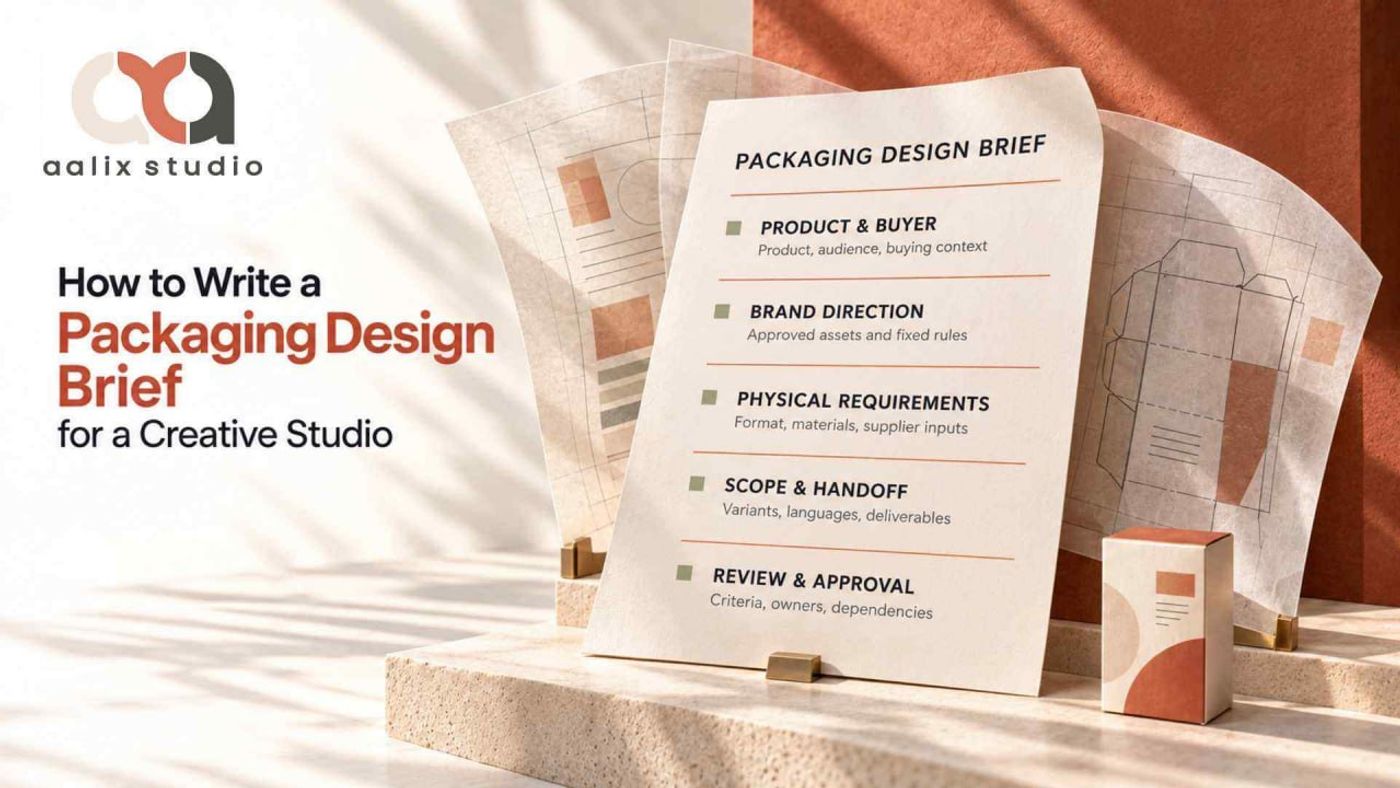
A packaging project can look ready to start when the folder contains a logo, references, and a launch date. But basic questions can still change the work: which panel faces the shopper, whether the dieline is approved, who owns mandatory copy, and what the supplier has confirmed.
A useful packaging design brief brings those decisions into view before design progresses too far. It should explain what the pack needs to communicate, what is fixed, what is still open, and which production constraints affect the work. The goal is to give the studio enough context to propose a solution that can be reviewed and produced with fewer surprises.
Define the Product and Buying Situation
Open the packaging design brief with the reason for the project. State whether you are launching a product, extending a range, entering a new market, or replacing packaging that causes a specific problem. Attach existing packs where relevant and describe what should improve. “Customers confuse the two sizes” gives the studio a clearer task than “the design feels dated.”
Turn Audience Information Into Design Priorities
Describe where the buyer encounters the product and what they need to recognize quickly. Include the sales channel, price position, competing choices, and familiarity with the brand. Shelf display and a small ecommerce image deserve separate consideration if both matter to the launch.
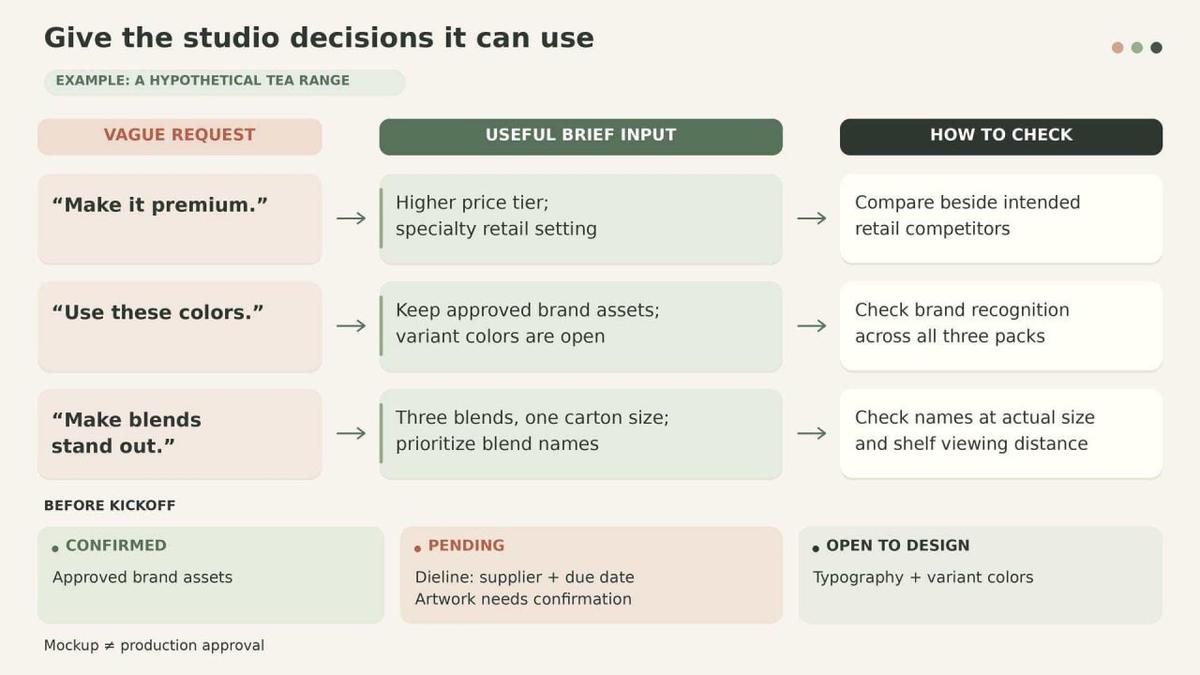
For a hypothetical tea range, a creative brief for packaging might say: “Three blends share one carton size. Shoppers must distinguish the blend names quickly while recognizing the same brand across the range.” That gives the designer a problem to solve without prescribing typography, imagery, or color too early.
Define the information hierarchy as well. Which should be noticed first: the brand, product category, variant, quantity, or distinguishing benefit? Identify supporting information that can move elsewhere. If stakeholders disagree about the order, resolve that disagreement before asking the designer to make every message equally prominent.
Give the Studio Usable Brand Direction
Provide approved logo files, typography, color specifications, photography, and the brand guidelines that actually apply to the project. Include examples of existing applications the packaging should feel connected to. Aalix Studio’s Digital Design & Branding practice provides broader context for keeping visual communication coherent across touchpoints.
Separate Requirements From Preferences
Mark important decisions as fixed, preferred, or open, and explain why a fixed rule exists. A logo may need to remain unchanged while the treatment of product names can still be explored. An inherited layout should not become mandatory simply because a previous supplier used it.
Translate adjectives into something the studio can investigate. If “premium” means entering a higher price tier, explain the intended position and relevant competitors. If a stakeholder prefers foil, record it as a preference until the supplier confirms feasibility and cost. This prevents a visual reference from quietly becoming a production commitment.
References should also include a specific observation: “The product name remains readable at small scale” or “The variants feel related without becoming indistinguishable.” A creative brief for packaging is more useful when references explain what should be learned from them rather than prescribing another brand’s appearance.
Confirm Structure and Production Inputs
Product packaging requirements should distinguish graphic design from structural work. State whether the studio is creating artwork for an approved pack or whether the project also includes decisions about construction, opening, protection, assembly, or materials. Confirm who owns structural development and supplier coordination before estimating the work.
Identify the Dieline and Its Approval Status
A dieline maps the package structure for artwork placement, including cutting and folding information. Supply the current supplier file, its version, and its approval status. Ask the supplier to confirm which areas are visible, concealed, joined, or unavailable for important information when the pack is assembled.
If dimensions, materials, or closures remain undecided, say so in the packaging design brief and name the person responsible for resolving them. Early visual exploration may still be possible, but detailed artwork should be scheduled around those dependencies because a wider panel or different closure can change the available design space.
Record known printing methods, materials, finishes, and supplier restrictions. Use the printer’s current artwork specifications rather than generic settings from another job. Product packaging requirements should also identify barcode needs and who will verify placement, contrast, size, and clear space.
Assign Ownership of Mandatory Content
Supply approved product names, quantities, instructions, warnings, claims, and other required copy as applicable. Identify the markets and language versions involved. Qualified client reviewers should validate regulated or mandatory content; the studio needs clear responsibility for incorporating approved text and tracking changes.
Pending copy needs an owner, status, and deadline. A paragraph described as “roughly this long” may grow after review, which can change panel planning. If space becomes tight, ask the studio to flag the conflict rather than simply shrinking everything to fit. The brief should identify who can shorten optional marketing copy and who must approve changes to mandatory text.
Define the Scope and Handoff
List every product, size, language, market, and pack format included in the commission. A stock keeping unit, or SKU, may require a separate artwork file even when most of the design is shared. Confirm which adaptations are included now, which are future variants, and which will require a separate quote.
Distinguish Presentation From Production Deliverables
Specify whether the project requires concept presentations, digital mockups, editable source files, final artwork, supplier-ready files, or guidance for future variants. A mockup helps stakeholders understand a proposed design, but it does not prove that the physical pack or print result is ready for production. Agree with the supplier which artwork checks, samples, or print proofs are required before approval.
For the hypothetical tea range, the packaging design brief might request one shared design system, artwork for three blends, and a clear rule for adding future blends. Testing only one attractive hero pack would leave the range logic unproven. Review the variants together and include the smallest format, where limited space often exposes weaknesses first.
Aalix Studio’s GTOA branding case study illustrates the broader principle of maintaining a coherent system across different audiences and applications. Packaging adds physical structure and production checks that must still be resolved within the scope of the packaging project itself.
Plan Reviews Around Specific Decisions
The packaging design process includes different kinds of approval. Concept approval concerns direction and information hierarchy. Artwork approval concerns final content and files. Supplier review concerns production constraints. Name the reviewers for each decision and appoint one person to consolidate client feedback before it reaches the studio.

Set Acceptance Criteria Before Concepts Arrive
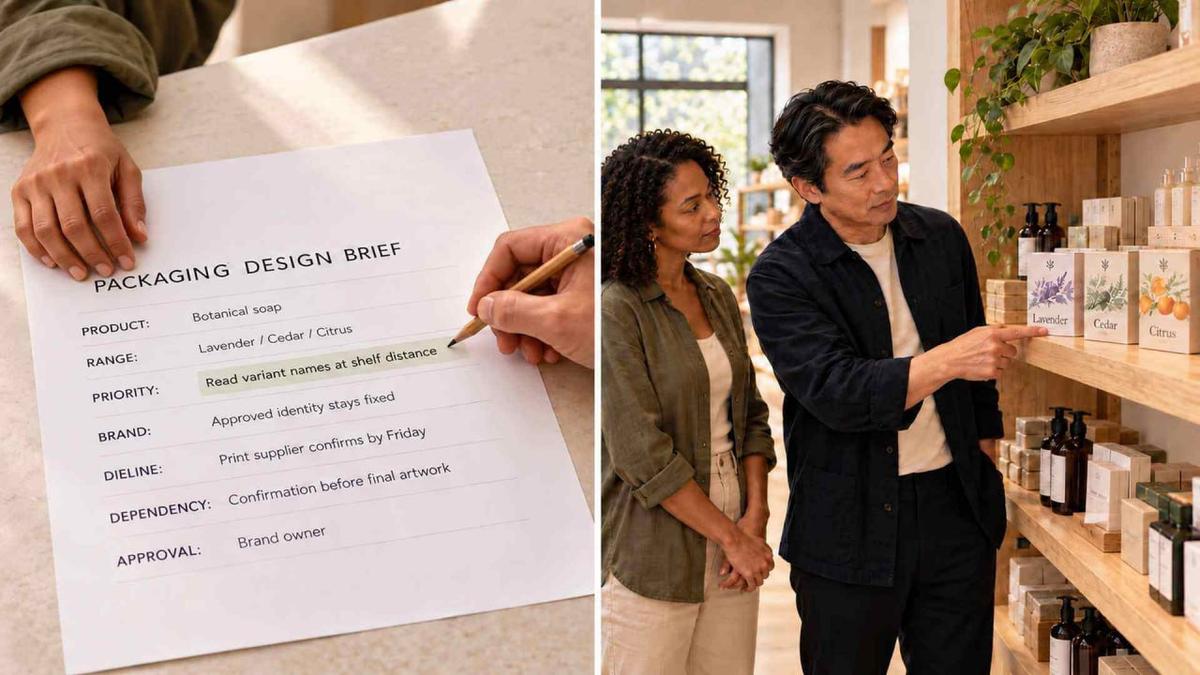
Use the packaging design brief to define how proposals will be judged. Check whether the product is identifiable, priority information is readable in the intended setting, variants can be distinguished, required content fits, and the family remains coherent. Personal taste can inform discussion, but it should not replace these criteria.
Map the packaging design process backward from the intended production date. Include time for content approval, supplier feedback, agreed physical samples or print proofs, corrections, and final artwork release. A launch date alone does not show when each decision must be made.
Share budget constraints for both design and packaging production. The studio’s scope affects how many routes and adaptations can be explored, while supplier costs may limit materials, finishes, or proofing. Record assumptions explicitly. Aalix Studio’s creative project process article explains how briefing, review, refinement, and delivery connect across a wider project workflow.
Check the Brief Before Kickoff
Use this packaging brief checklist to identify gaps that would prevent the studio from estimating, planning, or evaluating the work:
- State the product problem, project objective, and buying situation.
- Define the audience, sales context, and front-panel message priority.
- Provide approved brand assets and distinguish fixed rules from preferences.
- Attach the current dieline and record its version, approval status, materials, and supplier constraints.
- List mandatory copy, languages, barcode requirements, and the owner of each approval.
- Confirm every SKU, format, deliverable, future-variant expectation, and production handoff requirement.
- Define review criteria, approval responsibilities, budget, timeline, and supplier checkpoints.
- Give every unresolved input an owner, deadline, and note explaining which decisions depend on it.
A packaging brief checklist should expose uncertainty rather than pretend everything is final. Keep the brief in one agreed location with dated revisions so the studio is not following instructions that were superseded in an email or meeting.
Revisit the creative brief for packaging whenever a meaningful requirement changes. Adding a language, changing the carton, introducing another SKU, or changing a finish can affect scope and timing. Updating the brief makes the packaging design process easier to manage because everyone can see which earlier decisions need to be reconsidered.
Final Thoughts
Before sending your packaging design brief, ask whether the studio could estimate the work, identify the unresolved dependencies, and explain how a proposed design would be evaluated. If the brief only supports a moodboard, it probably needs more product, content, or production detail.
You do not need every creative answer before kickoff. You do need enough confirmed information to begin the right work, with clear ownership for the decisions that follow.
Packaging Design Brief FAQ
What should a packaging design brief include?
Define the product, audience, message priorities, brand rules, production constraints, deliverables, budget, timeline, and approval responsibilities. Include expectations for future variants and identify any unresolved inputs that could affect the work.
Who supplies the dieline and mandatory copy?
The brief should identify the supplier responsible for the approved dieline and the qualified reviewers responsible for validating mandatory or regulated copy. The studio should know which source is authoritative before final artwork is approved.
Is a digital mockup enough for production approval?
No. A digital mockup helps stakeholders understand the design, but production approval may require artwork checks, physical samples, print proofs, or other supplier-specific verification. Agree the required checks with the supplier before final approval.
Can design begin before every detail is confirmed?
Yes, if unresolved inputs have named owners and deadlines, and the studio understands which design or production decisions depend on them. Early exploration can continue while critical dependencies are being resolved.