Before a garment reaches production, brands are already making decisions about fit, fabric, sizing, and sampling. 3D garment visualization can make some of those decisions easier, but it does not belong in every development workflow.
The useful question is simple: what problem will the 3D stage prevent?
In garment production, small development issues can become expensive once a style moves into volume. A sample may look right in one size and lose its balance after grading, or several physical versions may be made before only a few styles are approved.
In those situations, a digital stage can help the team review the design earlier and decide whether it is ready for sampling, needs adjustment, or should be dropped before more time and material are committed.
What 3D Garment Visualization Can Actually Help You See
In product development, a convincing render is not enough. The digital model needs to help the team make a real garment decision.
That can include reviewing fit, proportion, fabric behavior, trims, color placement, and construction details before a physical sample is made.
The value of 3D garment visualization is not the image itself. It is the ability to identify visible issues early enough to change them.
See Proportion Before You Sew It
Flat sketches and technical drawings are essential, but they do not always show how volume, length, and proportion will behave on the body.
Digital garment prototyping gives the designer a clearer way to test those relationships before fabric is cut. It can reveal whether a silhouette feels balanced, whether a hem or sleeve length is working, or whether a design detail is changing the overall proportion more than expected.
Poor Inputs Can Make a Good Simulation Misleading
A 3D simulation is only as reliable as the information behind it.
CLO3D fashion design can produce a convincing result, but inaccurate patterns, body measurements, or fabric settings can make that result misleading.
Good 3D fashion design still depends on solid pattern work, realistic material data, and professional judgment. The software can visualize the setup, but it cannot correct poor inputs on its own.

High-Volume Production Is Where the Business Case Becomes Strongest
The business case for 3D garment visualization becomes stronger when a style is moving into volume production, because one unresolved issue can affect far more than a single sample.
Problems discovered after fabric has been ordered, markers prepared, or sewing capacity booked are much more expensive to correct.
Virtual fashion sampling gives the team a chance to review silhouette, proportion, fabric behavior, and detail placement before another physical sample is made. If something is clearly not working, it can be adjusted before the same problem reaches a larger production run.
It can also reduce unnecessary sampling. Instead of sending every concept into the sample room, weaker options can be filtered earlier so physical sampling is reserved for styles that have already passed an initial digital review.
In some collections, that review may be as simple as comparing silhouettes, testing fabric behavior, or choosing between color and trim options.
Size Grading Is One of the Strongest Use Cases
Size grading is one of the clearest use cases for 3D garment visualization because a base-size sample can look right while problems appear elsewhere in the size range.
A grade can be mathematically correct and still change the visual balance of the garment. A pocket that works on a size M may feel too dominant on a size S, while a cropped jacket, seam line, print, or trim placement may lose its intended proportion as sizes change.
Virtual fashion sampling lets teams compare several graded sizes on digital bodies before committing to physical samples across the full range. In CLO3D fashion design, that comparison can help identify which sizes need closer physical fit validation.
A skilled pattern maker or fit specialist is still essential. The goal is not simply to confirm that grading rules were applied, but to check whether each size still looks and behaves like the same design.
Bridal and High-Value Custom Work Follow a Different Logic
Bridal and custom garments create a different business case. Production volume is low, but each major alteration carries more weight because expensive fabrics, complex construction, embellishment, and client expectations can make late changes costly.
3D garment visualization is especially useful when the client needs to compare options that are difficult to imagine from a sketch alone. That may include neckline depth, sleeve volume, skirt shape, train length, or overall proportion.
When the digital avatar is adjusted to approximate the client’s measurements, the designer can compare those choices before committing to physical reconstruction. Fittings are still essential, but some visual decisions can be resolved earlier.
This is closely related to Aalix Studio’s guide to custom eventwear design, where silhouette, fabric, proportion, and fittings all need to work together.
Virtual fashion sampling can also give the client a clearer reference for approval, especially when the cost of changing the garment later would be high.
Sometimes the Right Decision Is to Skip 3D
3D is not automatically the most efficient option for every garment.
For a small workshop producing simple, low-cost pieces in limited quantities, building a full digital version may take more time and cost more than the problem it is meant to prevent.
The key question is whether the 3D stage is solving a specific production, fit, sampling, or approval problem.
It usually makes more sense when:
- correcting an issue after sampling or production would be expensive.
- multiple samples or fittings are likely.
- size, proportion, fabric behavior, or client approval is difficult to judge from 2D information.
If none of these apply, a technical sketch, toile, or direct physical sample may be the more practical choice.
For low-margin products, 3D development should not become an automatic extra step simply because the technology is available.
Where 3D Development Meets Physical Sampling
A digital garment can answer many development questions, but some decisions only become clear once a physical sample exists.
In CLO3D fashion design, teams can compare silhouette, proportion, grading, colorways, and construction choices before deciding which versions deserve physical sampling.
A focused digital garment prototyping stage can remove obvious issues early and reduce unnecessary sample-room work.
Physical samples are still essential for questions that depend on real materials and wear: how the fabric feels, how seams behave, whether the garment is comfortable, and how it moves on the body.
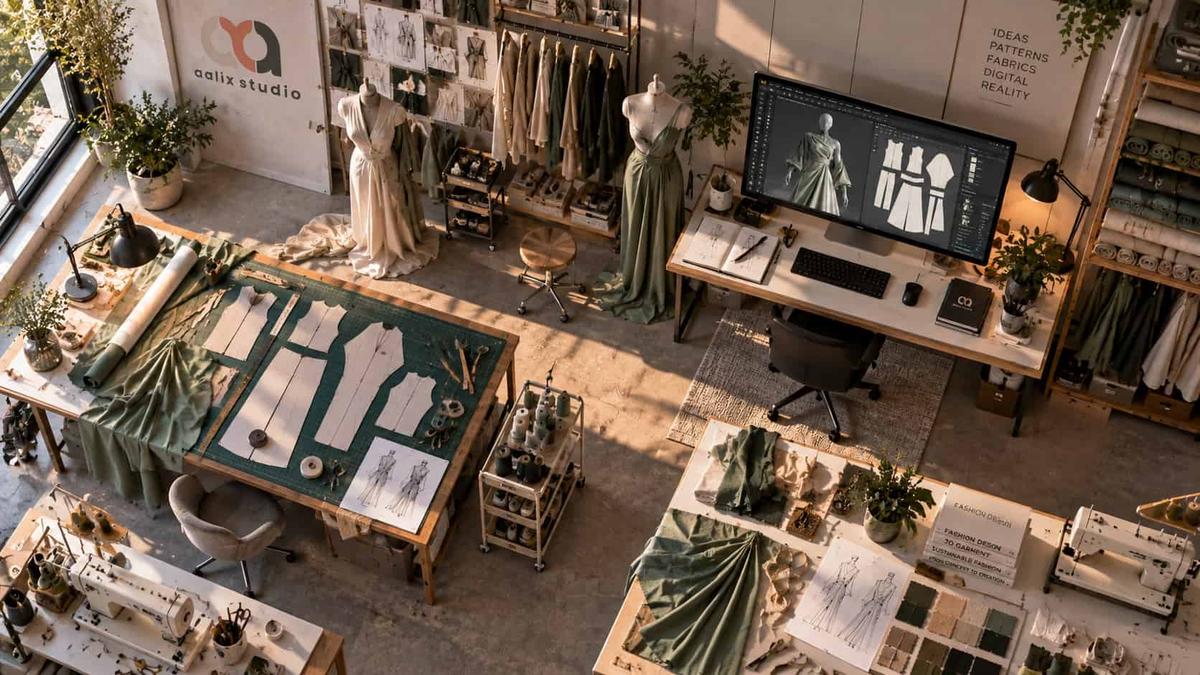
The most effective workflow uses each tool for what it does best. Use the digital stage for early visual and construction decisions, then use the physical sample to validate fabric response, comfort, movement, and sewing quality.
Aalix Studio’s Fashion & Apparel services place 3D development alongside broader fashion design and technical work rather than treating it as a standalone rendering service.

A Practical Decision Rule for Fashion Brands
The simplest way to judge 3D garment visualization is to compare its cost with the cost of discovering the same problem later.
For a factory, that later cost may include extra sampling, production delays, grading corrections, or inventory problems caused by poor fit or proportion across sizes. For bridal or custom work, it may mean additional fittings, reconstruction, or major design changes late in the process.
For simple, low-risk garments, the digital stage may cost more than the issue it is meant to prevent.
Selective use is usually the better approach. 3D fashion design is most valuable when the information it provides can still influence the garment before expensive work begins.
Final Thoughts
The right time to use 3D garment visualization is before an uncertain decision turns into fabric, labor, fittings, or finished inventory.
For factories, that may mean reviewing grading, reducing unnecessary samples, or catching visible issues before bulk production. For bridal and custom work, it may mean helping the client understand proportion, volume, or design changes before those decisions become expensive to reverse.
A digital garment and a physical sample are useful for different reasons. Use the digital version to compare alternatives, review proportion, and test grading. Use the sewn sample to validate comfort, movement, fabric response, and construction quality.
3D is most valuable when it helps the team make a better decision earlier. If it prevents an unnecessary sample, exposes a grading problem, or gives a client enough clarity to approve a difficult design choice, it has done its job.
3D Garment Visualization FAQ
What is 3D garment visualization?
It is a digital method for reviewing fit, proportion, fabric behavior, and construction before physical sampling.
When is 3D garment visualization most useful?
It is especially valuable for high-volume production, complex grading, bridalwear, and costly custom garments where late changes can be expensive.
Can 3D garment visualization replace physical samples?
No. Digital garments support early decisions, while physical samples confirm comfort, movement, sewing quality, fabric response, and final fit.
Can 3D garment visualization reduce sampling?
Yes. It can help filter weaker concepts and correct visible issues before physical sampling begins.
When should brands skip 3D garment visualization?
For simple, low-cost, low-risk garments, the added digital stage may cost more time and money than the problem it is meant to prevent.