A folder of outfit references can show a designer what attracts you without explaining what you need them to develop. A coat admired for its shape might be too heavy for your customer, too costly for the intended price, or unsuitable for the way you plan to produce it. Those contradictions need attention before sketching becomes detailed.
Clothing design project preparation gives the first conversation a usable starting point. You can arrive without finished designs or technical expertise. What matters is explaining the intended wearer, the available budget, and the decisions you need the designer to help resolve. A clear account of those needs is more useful than a polished presentation that leaves them unanswered.
Define the First Commission Before the Whole Collection
Begin by naming the next result you need. Exploring a collection direction, developing one garment for sampling, and revising an existing style are different commissions. State how many styles are involved and whether color variations belong to the same design or require separate development.
Separate Your Inputs From the Designer's Deliverables
Your fashion design project inputs might include customer notes, references, existing samples, and business constraints. Technical drawings, patterns, or a tech pack may be commissioned outputs rather than documents you must already have. A tech pack records garment specifications for development and manufacturing; it is not the entry ticket to an initial design discussion.
The distinction matters when working with a fashion designer because the word “design” can cover very different responsibilities. AALIX's fashion expertise spans concept work, technical design, pattern development, and visualization. Agree which of those activities your commission includes, who handles sourcing and sampling, and where another specialist must take over.
Make the Intended Next Use Explicit
The next user determines what the delivery needs to contain. A buyer presentation differs from a pattern maker’s instructions. Confirm usable formats, editable files, measurements, and any physical samples included. Agree the checks needed before manufacturing; a file list does not approve fit, materials, or construction.
An illustrative brief might read: “Develop one commuting jacket for customers who cycle to work in office clothing. Please quote for two concept options, with a review requested for 15 March. Our budget ceiling and target retail range are in the attached cost sheet. Sampling needs a separate quote. Fabric and manufacturer are unconfirmed. I approve concepts; our sample maker advises on construction.”
The date is a requested review, not a promised turnaround. The designer’s written response completes this part of clothing design project preparation by confirming feasibility, price, included revisions, and the first deliverables. This example commissions concept exploration; patterns and a physical sample would need their own agreed scope.
Describe the Wearer Through a Real Situation
“Women aged thirty to forty” provides limited direction without a picture of daily use. Consider a jersey dress worn through a full working day: sitting comfort, opacity when stretched, and washing expectations could all influence development. These wearing conditions give clothing design project preparation a firmer basis than age alone. Climate, layering, and movement help the designer judge which attractive ideas would actually suit the wearer.
Give Fit References Without Prescribing the Pattern
Bring an existing garment if its fit helps explain the intention. Identify the parts that work and the parts that do not, including sleeve movement, body length, and room over other clothing. A size label alone does not communicate these relationships. State the intended size range and whether you already have body measurements, a fit model, or an established sizing system.
For a new label, fashion design project planning should include deciding how the first size will be evaluated. Ask the designer what information is needed before fit development begins. Do not turn measurements taken from a favorite garment into an approved specification without discussion; its material, construction, and intended ease may differ from the proposed piece.
Edit References Until They Explain Your Direction
Reference editing is part of clothing design project preparation. Note which features matter in each image and which should be ignored. Examples you dislike can clarify a boundary. A visually coherent board can still contain incompatible requirements.
The published Vir Maison autumn collection brief describes everyday outerwear balancing structure, comfort, and a refined visual identity. Those are useful tensions to name in a brief. The practical lesson is to explain which qualities must coexist, then give the designer room to explore how the garment could achieve them.
When working with a fashion designer, rank references by purpose. An exaggerated sleeve may conflict with easy layering. Deciding which matters more gives the designer a basis for proposing alternatives. Asking them to combine every visible detail leaves that conflict unresolved and makes later rejection more likely.
Put Cost and Material Uncertainty on the Same Page
Keep development spending separate from the intended product economics. The financial part of clothing design project preparation should establish the design budget, sampling allowance, target retail range, and any manufacturing cost target you already use. Each figure needs a currency and a clear statement of what it includes. A retail price is not a factory cost allowance, and neither establishes the amount available for design work.
If the scope exceeds the development budget, discuss what can wait. One representative style may answer more useful questions than limited work across a whole collection. Agree what that smaller commission will establish before choosing it.
Show What Is Available and What Is Only Preferred
Among the most useful fashion design project inputs are labeled fabric swatches and supplier details, if you have them. Record known composition, weight, width, minimum quantities, and availability, while marking unconfirmed details clearly. A photograph can suggest color or surface appearance, but it cannot establish how the actual textile feels, stretches, or behaves after washing.
Where material selection remains open, describe the required performance and how the fabric should feel. Someone must investigate options and arrange relevant testing. For a jersey dress, a swatch that looks opaque on the table may become sheer when stretched over the body. Clothing design project preparation should flag that question before appearance alone determines the fabric choice.
Share production assumptions as well. Name the manufacturer if one is appointed, or explain whether sourcing is still required. Include provisional quantities and any known equipment or construction constraints. Fashion design project planning becomes more realistic when the designer can distinguish confirmed manufacturing conditions from an initial preference that still needs a supplier's response.
Plan Reviews Around Decisions Rather Than Dates Alone
A launch date gives the designer an endpoint, but it does not show when your decisions are needed. Include concept reviews, sample requirements, and outside dependencies in clothing design project preparation. Fabric availability and the sample maker’s capacity need confirmation before dates become commitments. A review postponed by a week may leave less time for corrections; it does not automatically move the launch. Distinguish the date you want from the delivery date the designer agrees to meet.
Discuss who can approve creative direction and who evaluates fit, cost, or production feasibility. These may be different people. Assign one person to consolidate comments before returning them to the designer, while preserving any unresolved disagreement. Working with a fashion designer becomes difficult when separate reviewers each believe their message is the final instruction. Use the first review to settle three practical questions:
- Which direction is approved, and which alternatives should stop developing?
- What remains unresolved, and who will provide the missing information?
- What must be checked before the next stage can begin?
Keep the answers with the reviewed version. Agree the included review rounds and how changes will be assessed. In fashion design project planning, a different wearer or garment category may reopen material research, costing, and the development schedule.

Send an Organized Brief With Clear Open Questions
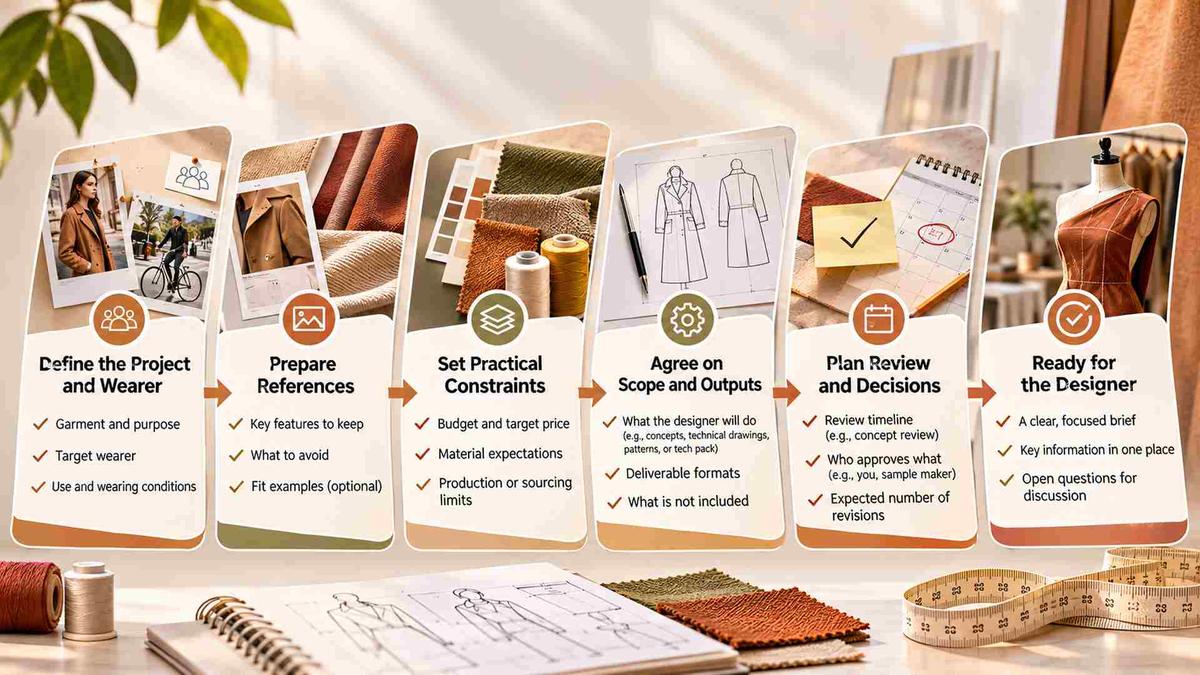
Your fashion design project inputs are easier to use as one dated brief, annotated references, and relevant existing files. Mark old versions as superseded and explain which archived items still apply. Keep unanswered questions together so they are easy to find during the first discussion.
For inherited patterns or samples, state whether they were approved, rejected, or never tested. Include current comments and features to retain. An attractive sample is not evidence that fit was approved.
You can use the fashion design process guide to understand how the initial brief develops into sketches, technical information, and samples. At the start, ask the designer to confirm what is sufficient for exploration and what must be resolved before technical development. Exploration can begin with open questions that would need answers before a pattern is drafted.
If the customer or product remains undefined, a separate discovery commission can establish them before garment development begins. A missing supplier detail may only require a named person to obtain an answer. The distinction is whether the uncertainty changes what the designer is being asked to make.
Conclusion
Before sending the brief, ask whether the designer could explain what they are making, for whom, within which constraints, and what needs approval next. Then check whether each unanswered question has an owner. Clothing design project preparation is sufficient when it supports the work you are commissioning now and makes the limits of that knowledge visible. Send that version, ask what the quoted work includes, and resolve the gaps that would otherwise force the designer to guess.
Starting a Clothing Design Project FAQ
What should I send a clothing designer first?
Share the intended wearer, garment purpose, annotated references, budget, timing, and the first deliverables you need. Include any existing measurements.
Do I need a tech pack before contacting a designer?
No. Technical documents can be commissioned outputs. Clarify which development stages the designer will handle.
What if I have not chosen fabric?
Describe performance needs and flag material selection as unresolved. Agree who investigates suitable options.
Does a concept design fee include samples?
Do not assume so. Confirm whether patterns, physical samples, revisions, and editable files are included before approving the commission.