Outsourced game art projects often run into problems because the internal team assumes certain information is obvious while the external studio has never seen it.
A request such as “create a realistic futuristic jacket for our main character” may sound specific, but an outside artist still needs to understand camera distance, material behavior, topology, rigging requirements, engine setup, and final delivery expectations.
A clear game art brief makes those assumptions visible before production begins and gives the outsourcing studio enough context to estimate, create, review, and deliver the asset properly.
Before work starts, three things should be clear:
- what is being created and where the asset will be used;
- what visual direction the artist should follow;
- what technical, delivery, and approval requirements define a finished asset.
The brief does not need to prescribe every artistic decision. It should focus on the information that can affect scope, schedule, visual quality, or technical usability.
What Is a Game Art Brief?
A game art brief is a production document built around a specific outsourced task.
It sits between a moodboard and a full art bible, giving the external team only the information it needs for that piece of work.
A useful brief should explain the asset’s role, visual direction, technical constraints, expected deliverables, and the criteria used to decide when the work is complete.
The goal is not to document the entire game. It is to remove the assumptions that could affect how the asset is scoped, built, reviewed, or delivered.
Start With the Project Context
Before describing the asset itself, explain the environment in which it will appear. The outsourcing studio does not need the entire game design document, only the context that affects production decisions.
Useful details include the genre, target platform, engine, camera perspective, visual style, and the asset’s role in gameplay or cinematics.
A hero garment used in close-up dialogue scenes needs a different level of detail from clothing worn by distant NPCs. That context helps the artist understand where extra production time matters and where it does not.
The clearer this context is, the easier it becomes to make decisions about fidelity, materials, topology, and delivery expectations later in the brief.
Define the Game Asset Requirements
Once the project context is clear, define exactly what the outsourcing studio is being asked to produce.
The game asset requirements should cover the asset type, quantity, intended use, and expected fidelity rather than relying on vague terms such as “high quality.”
For example, the scope might include one hero jacket, one pair of trousers, three accessories, and four color variants. The brief should also explain whether each asset is intended for gameplay, cinematics, customization, promotional renders, or several of those uses.
Intended use affects production decisions. A garment shown close to the camera may need more careful topology, deformation, and material detail than clothing made for distant NPCs.
Aalix Studio’s guide to game-ready 3D assets explains why a polished render alone does not make an asset production-ready.
Build an Art Direction Brief Artists Can Use
An art direction brief should give artists enough visual guidance to make consistent decisions without prescribing every detail.
Terms such as realistic, futuristic, dark, premium, or stylized are useful starting points, but they are too broad on their own. Two experienced artists can read the same word and imagine very different results.
A near-future tactical garment, for example, might be defined by a restrained silhouette, functional construction, matte technical textiles, reinforced areas, and minimal science-fiction ornamentation. That gives the artist a much clearer target than simply asking for something “futuristic.”
Materials need the same level of specificity. Leather might be polished, cracked, synthetic, soft, or heavily worn. It is also useful to document what the project should avoid.
If two artists can read the brief and still arrive at completely different interpretations, the visual direction probably needs more detail.
Use References With a Specific Purpose
Reference images are most useful when the artist knows exactly what to look at in each one.
Sending a large folder of images without explanation can create more ambiguity than clarity. The external team may not know whether a reference is meant to show silhouette, construction, material behavior, surface detail, color, or overall mood.
Add a short note to the most important references. One image might be used for collar construction, another for textile finish, and another for detail density.
Notes such as “use the layered silhouette, not the color palette” or “match the material finish, not the shape” can prevent the artist from copying the wrong part of a reference.
The goal is to make each reference answer a specific visual question.
Specify the Technical Requirements Early
Technical requirements are much easier to get right before detailed production begins than to repair later.
A game art outsourcing brief should reflect the actual target platform and pipeline rather than rely on a generic checklist.
For 3D work, clarify:
- target engine, scale, topology expectations, deformation needs, triangle limits, and required LODs;
- texture resolution, texel density, PBR workflow, material structure, and channel-packing rules;
- source files, export formats, naming conventions, folder structure, and any requirements for testing the asset in the target engine.
Each technical limit should have a clear production reason behind it. A triangle budget, for example, means little without context about target hardware, camera distance, or deformation needs.
The brief should also distinguish between a visually finished model and a production-ready package. Aalix Studio’s guide on how to choose a game art studio covers that wider production-fit question.

Define Deliverables and the Review Process
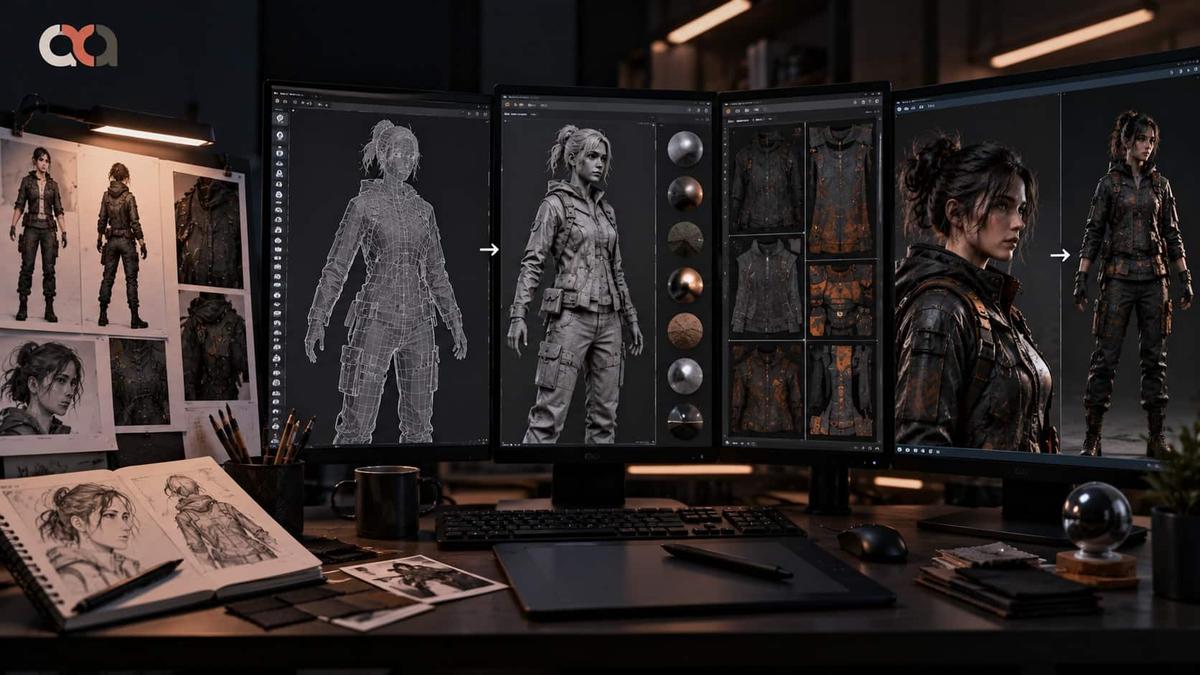
The brief should state exactly what the final handoff includes. “One 3D character” is not specific enough if the client expects source files, textures, LODs, rigged versions, or an engine-ready package.
Deliverables also affect pricing. An FBX and texture set is a very different scope from a complete production-ready handoff.
The review process should be defined just as clearly. Major decisions are easier to correct before the next production stage makes them expensive to change.
A studio might approve the blockout before detailed modeling, review materials in-engine before final delivery, and check technical integration before sign-off.
Ideally, one person on the client side should consolidate feedback before it reaches the outsourcing team. That reduces conflicting instructions and makes approval easier to track.
Define What “Done” Means
Deliverables describe what the studio hands over. Acceptance criteria define the condition those deliverables must meet before the work is considered complete.
An asset can look finished in a render and still fail inside the actual game pipeline.
Imagine a 3D jacket with an approved silhouette and convincing materials. After import into Unreal Engine, the scale is wrong, the shoulders collapse during deformation, and the material setup behaves differently from the approved preview.
In that case, approving the render does not mean the asset is production-ready.
The game asset requirements should include practical checks such as correct scale, topology, texture setup, naming, file structure, deformation, and engine behavior where relevant.
A clear definition of “done” protects both sides from discovering missing requirements only at the end of the project.

Example: From a Weak Request to a Production Brief
Consider the request:
“Create a realistic dark futuristic jacket for our main character.”
The creative idea is understandable, but the artist still has to guess at topology, material complexity, texture resolution, deformation needs, engine setup, and final delivery requirements.
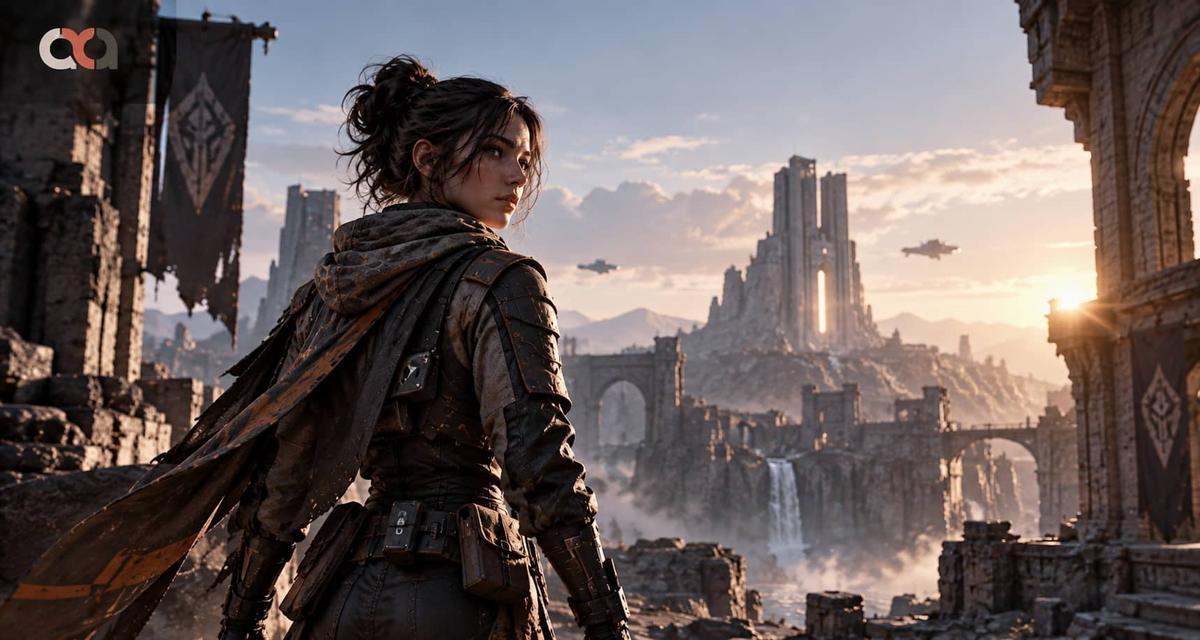
A stronger creative brief for game art would define the jacket as a hero garment for a third-person character used in both gameplay and close-up dialogue scenes.
The visual direction might specify semi-realistic near-future tactical fashion, matte technical fabric, reinforced panels, and minimal science-fiction ornamentation.
The technical section could identify Unreal Engine, include the existing body and rig, define topology and deformation expectations, and specify export formats. References could then be organized by silhouette, construction, surface treatment, and detail density.
The creative idea has not changed. What has changed is the amount of information the artist has to make reliable production decisions without filling in the gaps alone.
What If You Do Not Know Every Technical Requirement?
Not every technical decision needs to be finalized before the brief is written.
If something is still unresolved, mark it as an open question instead of leaving the outsourcing studio to make assumptions.
For larger or more technical projects, a pilot asset can be useful. It can expose issues with topology, shader setup, export settings, deformation, or engine integration before the full production scope begins.
The results of that test can then be used to refine the game art brief and confirm the remaining technical requirements.
Uncertainty is manageable when it is visible. Hidden assumptions are much more likely to create rework later.
Common Game Art Brief Mistakes
Even experienced teams can create unnecessary revisions when key decisions stay vague for too long.
Before sending the brief, check for three common problems:
- vague visual language or references with no explanation of what the artist should take from them;
- technical requirements introduced only after modeling or texturing has already started;
- unclear deliverables, conflicting feedback, or no agreed definition of final approval.
These issues are easy to clarify in a document and much harder to fix once production is underway.
A strong game art brief reduces that risk by making the important decisions visible before they become expensive to change.
From Game Art Brief to Production
A good game art brief gives the outsourcing studio enough structure to make reliable production decisions without removing every creative choice.
The document should focus on information that changes how the work is scoped, built, reviewed, integrated, or delivered.
For specialized 3D production, that often means being clear about asset use, visual direction, technical constraints, review stages, source files, and the conditions that define a production-ready handoff.
Aalix Studio’s Game Art & 3D Asset services focus on specialized 3D production, including digital garments, selected game assets, materials, surfaces, and real-time workflows.
A well-written game art outsourcing brief helps surface technical and production questions early, when they are still easier to solve.
Game Art Brief FAQ
What should a game art brief include?
It should cover project context, asset scope, visual direction, references, technical requirements, final deliverables, review stages, and acceptance criteria.
How detailed should a game art outsourcing brief be?
It should clarify any decision that could affect cost, schedule, visual quality, technical integration, or delivery without prescribing every artistic choice in advance.
What is the difference between an art direction brief and technical requirements?
An art direction brief explains how the asset should look and feel. Technical requirements explain how it must be built, structured, tested, delivered, and integrated into the production pipeline.
Should references be included in a creative brief for game art?
Yes. Their purpose should be explicit, whether they show silhouette, materials, construction, surface treatment, or detail density.
What makes a game art brief production-ready?
It should define not only what the asset should look like, but also how it will be used, reviewed, tested, delivered, and accepted inside the target pipeline.

